For years, St. Patrick’s Day in our house meant leprechaun traps.
The week before St. Patrick’s Day, my kids would build their traps carefully and wait to see if they finally caught one on March 17. When they woke up, the trap would be “hacked,” green glitter scattered across the counter, and safe chocolate coins left behind. They never caught the leprechaun, but they still got to have fun and enjoy a sweet treat safely.
As my kids have gotten older, the traps have mostly disappeared. What hasn’t disappeared is our tradition of making something festive.
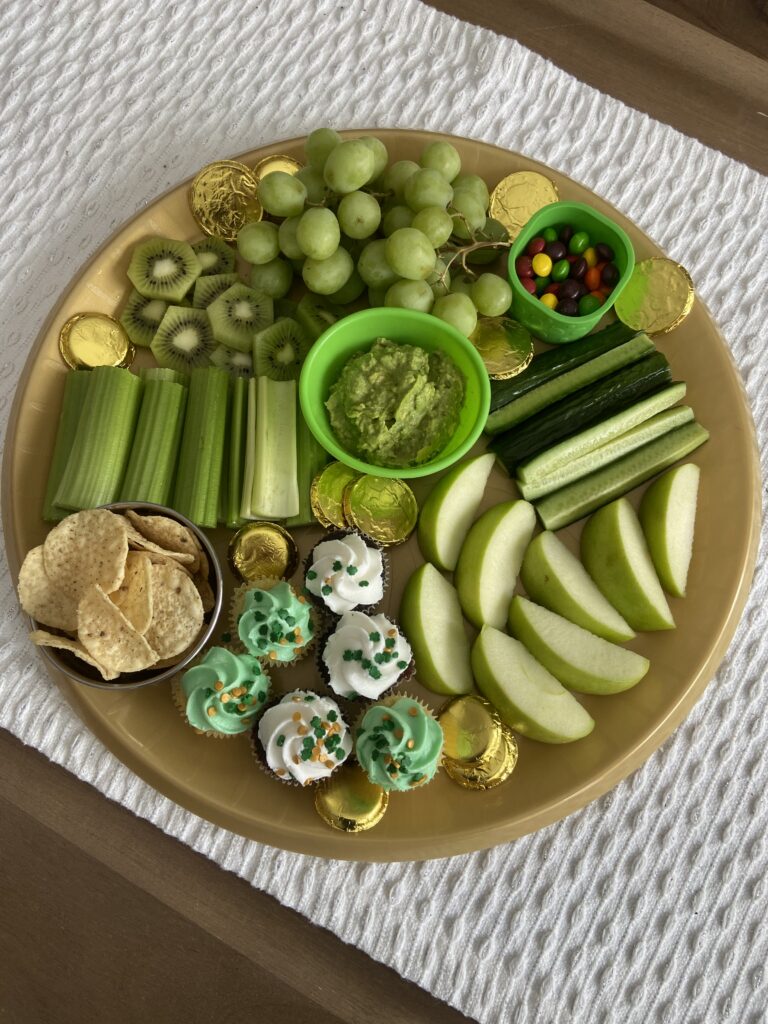
Charcuterie boards are one of the simplest ways to make holidays feel intentional without overcomplicating the food. A St. Patrick’s Day snack board like this one makes it easy to create something festive while still keeping ingredients simple and allergy-friendly. And as a registered dietitian who works with families managing food allergies, I know how quickly a simple snack spread can become stressful if allergens are not considered. If you’re unsure how food allergies differ from intolerances, you can read more about that here.
This St. Patrick’s Day charcuterie board keeps the festive green theme and “pot of gold” fun while staying peanut-free, tree nut-free, sesame-free, soy-free, egg-free, fish-free, and shellfish-free.
It does contain dairy and wheat. I clearly outline that below, along with easy swaps if you need to make it fully Top 9 free.
What to Put on a St. Patrick’s Day Charcuterie Board
Green Fruits and Vegetables (The Foundation)
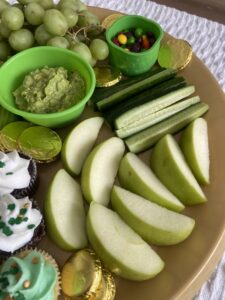
Start with naturally green foods. They create color without relying on packaged products and reduce label-reading stress.
Use:
- Green grapes
- Kiwi slices
- Cucumber rounds
- Green apple slices
- Celery sticks
- Green bell pepper slices
These whole foods form the foundation of the board. They add fiber, hydration, and crunch, and they help balance out the sweeter elements.
Keep similar items grouped together rather than mixing everything across the board. This makes it easier for children to identify foods.
Building your board around produce first keeps the focus on real food. The candy becomes an accent, not the main event.
Originally I planned to include rainbow sour candy to mimic the classic St. Patrick’s Day rainbow. However, the options available to me were produced in facilities with multiple allergens. In many allergy households, flexibility is part of the process, so we kept the focus on the green theme and the “pot of gold” chocolate coins instead.
Savory Anchor: Guacamole
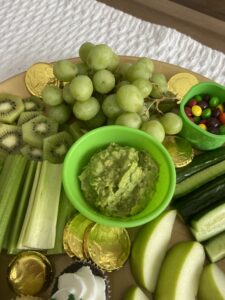
Place a small bowl of guacamole slightly off center. This anchors the board visually and adds something savory.
Simple guacamole works best:
- Avocado
- Lime juice
- Salt
- Garlic
Serve with corn tortilla chips (we love the lime flavor), and always confirm they are free from sesame and soy if those are concerns in your household.
The Pot of Gold
Chocolate coins bring the St. Patrick’s Day theme to life and add a small sweet treat to the board.
Place chocolate coins from Vermont Nut Free Chocolates in a few small clusters across the board to represent the “pot of gold.”
These coins are peanut and tree nut free, which makes them a trusted option for many allergy families. They do contain dairy, so be clear about that when serving.
Scattering a few coins across the board makes the display feel festive while keeping the focus on the produce and whole foods.
As always, re-check packaging before serving. Even familiar brands can change formulations.
You can also add a small bowl of Skittles for a pop of rainbow color. Keeping the candy contained helps prevent it from mixing into the produce sections while still adding a festive St. Patrick’s Day touch.
Green and White Buttercream Cupcakes
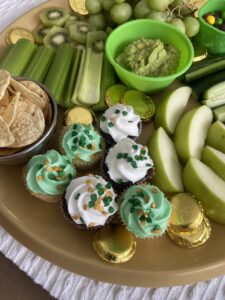
To round out the spread, add simple cupcakes topped with green or white buttercream with festive sprinkles.
These contain:
- Dairy
- Wheat
Place them on the edge of the board so they complement rather than dominate it. Keeping them slightly separate also helps prevent crumbs from mixing with the produce.
Cupcakes help turn this from a snack tray into a true holiday display.
You can make them from scratch or use a safe store-bought brand that meets your family’s allergen needs. Always review ingredient labels carefully, especially for seasonal mixes or frostings.
How to Arrange the Board So It Feels Intentional
Place the guacamole bowl near the center of the board first.
This acts as your anchor and helps you build the rest of the board around it.Arrange the green fruits and vegetables in grouped sections around the bowl.
Place grapes together, line up cucumber spears, fan out the apple slices, and keep the celery sticks grouped so each item is easy to see and grab.Add the chocolate coins in small clusters around the board to represent the “pot of gold.”
A few coins placed between sections of food help make the board feel festive without making candy the main focus.Place the Skittles in a small bowl near the edge of the board.
Keeping them contained prevents candy from spreading into the produce sections.Add the cupcakes along one side of the board.
This keeps them feeling like a special treat rather than the centerpiece and helps prevent crumbs from mixing with the fruits and vegetables.Fill small gaps with extra grapes or cucumber slices if needed.
This helps balance the layout so the board looks full without feeling crowded.Leave a little breathing room between sections.
A small amount of space keeps the board organized and makes it easier for guests to serve themselves.
Hidden Allergens to Watch on St. Patrick’s Day
Even when a board looks simple, seasonal ingredients can contain unexpected allergens. Always check labels carefully for:
- Soy lecithin in seasonal candies such as chocolate coins or Skittles
- Shared equipment statements on seasonal candy
- Sesame in flavored tortilla chips
- Egg or soy in boxed cake mixes or frostings
- Dairy in chocolate coins
- Wheat in cupcakes or baking mixes
Holiday packaging can change formulations, even for brands you buy regularly. Never assume last year’s product is the same as this year’s.
Because this board is built primarily around whole fruits and vegetables, the majority of the spread requires little to no label reading. That structure dramatically reduces risk and keeps the focus on simple, recognizable ingredients.
How to Make This Board Dairy-Free or Wheat-Free
If you need to modify it further, here are simple swaps:
To make it dairy free:
- Choose dairy-free chocolate coins
- Skip cupcakes and add more fruit
- Make dairy-free buttercream using a plant-based butter substitute
To make it wheat free:
- Use gluten-free cupcakes. If you’re unsure about the difference between wheat-free and gluten-free, I explain it here.
- Replace cupcakes with additional produce or safe packaged treats
- Confirm tortilla chips are certified gluten free if needed
You do not have to change the entire board. Small swaps can make it work for your family.
Looking for More Safe Snack Ideas?
If you’re managing food allergies and constantly searching for school-safe snack options, I put together a free Top 9 Free Snack List with 22 allergy-friendly ideas.
It includes packaged and homemade options that make label-reading easier and lunch packing less stressful.
You can download the free Top 9 Free Snack List here.
Why Charcuterie Boards Work So Well for Food Allergy Families
Charcuterie boards are not just trendy. A simple snack board layout is actually very practical for families managing food allergies.
Instead of one mixed dish where ingredients are combined, boards allow foods to remain separated. This reduces cross contact and gives parents control over what their child selects.
Boards also allow:
- Clear visual identification of each food
- Easier ingredient verification
- Safer hosting when guests have different needs
- Flexibility to swap items without changing the entire spread
For many allergy families, visual separation creates peace of mind.
How to Prevent Cross Contact When Building a Holiday Board
Even when ingredients are technically safe, cross contact can still occur during preparation.
Follow these steps:
- Wash hands thoroughly before handling food
- Use clean cutting boards and knives
- Slice produce before opening packaged candy to avoid residue transfer
- Keep allergen-containing cupcakes separate from produce
- Do not allow shared serving utensils between items
If serving guests with diagnosed allergies, consider labeling sections of the board.
For example:
“Candy contains dairy and wheat.”
How to Adapt This Board for Different Settings
This St. Patrick’s Day board can be adjusted depending on where you’re serving it.
For a Classroom
- Pre-portion produce into individual cups to prevent cross contact
- Keep candy contained in small bowls rather than scattered
- Confirm classroom allergy policies before sending anything in
- Pre-portioning removes shared utensils and reduces risk.
Pre-portioning removes shared utensils and reduces risk.
For a Small Family Gathering
- Keep everything on one board
- Use separate serving utensils for each section
- Allow children to build their own plates
Clear separation makes it easier for everyone to see what they are choosing.
For a Larger Party
- Create two smaller boards instead of one oversized tray
- Keep candy on one board and produce on another if needed
- Replace shared bowls with multiple smaller containers
Making It Balanced Without Removing the Fun
Many parents feel tension between making food “healthy” and making it festive.
This board bridges that gap. The foundation is built from whole fruits and vegetables, while the candy serves as a visual accent rather than the centerpiece. That structure helps keep blood sugar more stable, encourages children to try produce, maintains the holiday theme, and naturally limits how much candy ends up on their plate.
You do not have to eliminate fun foods to create balance. You simply anchor them within a thoughtful structure.
Hosting with Confidence When Managing Food Allergies
Holiday hosting can feel stressful when food allergies are involved.
Here are practical hosting guidelines:
- Share the ingredient list with parents ahead of time
- Keep packaging available in case questions arise
- Avoid homemade foods from unknown sources
- Do not assume something is safe based on appearance
Frequently Asked Questions
Can I make this board completely Top 9 free?
Yes. Replace dairy-containing chocolate coins with dairy-free options and use gluten-free or wheat-free cupcakes, depending on your family’s needs, with dairy-free buttercream. Verify all candy ingredients before serving.
Are Skittles allergy-friendly?
Formulations vary by region and production facility. Always review the ingredient label and allergen statement on the specific package purchased.
Can I skip the candy entirely?
Absolutely. You can build a full rainbow using fruit:
- Strawberries
- Mandarins
- Pineapple
- Kiwi
- Blueberries
- Grapes
This creates a completely whole-food version of the board.
What if my child has a severe allergy?
Keep their portion separate and plate it individually before placing the board out for general serving. This eliminates cross contact from shared utensils.
Why This Matters Beyond One Holiday
St. Patrick’s Day is just one celebration, but the skills you use to build this board apply all year long.
When you get comfortable reading labels, structuring food visually, separating ingredients, and communicating clearly about what is included, you are building systems. Those same systems carry into birthdays, classroom parties, family gatherings, and everyday meals.
Food allergies do not become manageable because life gets less busy. They become manageable because you develop habits that make safe choices second nature.
A holiday board like this is not just festive. It is practice in creating structure that allows your child to participate confidently and safely.
And that confidence matters far more than catching a leprechaun.