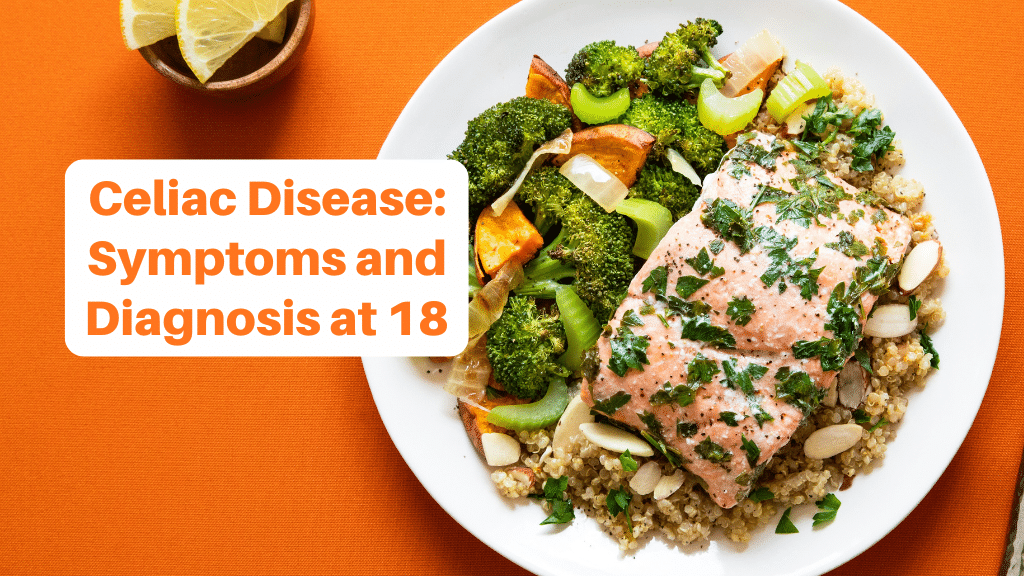
When someone is newly diagnosed with celiac disease, the biggest challenge is not just knowing what gluten is.
It’s understanding what real life actually looks like after the diagnosis, especially when celiac disease symptoms don’t always present the way you expect.
So instead of just explaining it, I want to show you.
This is a real story from a young woman who was diagnosed with celiac disease at 18, right before starting college. Her experience highlights what early symptoms can look like, how the diagnosis unfolds, and what it actually takes to adjust to a gluten-free lifestyle.
“I Was 18 When Everything Changed”
I was 18 years old, about to graduate high school and getting ready to start my next chapter at Auburn University when everything changed.
What should have been an exciting time quickly turned into months of feeling like I didn’t recognize my own body.
I was exhausted all the time.
I could barely eat.
I was dealing with constant nausea and vomiting.
At first, I thought it was stress. Maybe lactose intolerance. Something minor.
But it kept getting worse.
I had to quit soccer during my senior year. I was sick at my senior prom. I went from being active and healthy to feeling like a shell of myself.
Deep down, I knew something wasn’t right.
When Symptoms Start to Escalate

Her symptoms began earlier that year, around January, and progressed quickly. What started as nausea after eating turned into something much more disruptive.
“I always felt like I was going to throw up after I ate, and a lot of times I did. Sometimes even the smell or sight of food would make me gag.”
Within a couple of months, she was barely eating and had lost about 15 pounds. Nausea became part of her daily routine, and vomiting was happening multiple times per week.
At the same time, something else was happening that didn’t seem connected at all.
When Celiac Disease Shows Up as Joint Pain

“My joints hurt so bad, especially my back and knees. It wasn’t normal soreness. It felt like I was a 17-year-old in an 80-year-old body.”
At the time, this didn’t seem related to what she was eating. In fact, the pain became concerning enough that she saw a spine specialist, but nothing showed up.
This is where many people get stuck.
Celiac disease does not always look like a digestive condition. This is why joint pain is often overlooked as a symptom of celiac disease.
In her case, the connection only became clear later.
The Diagnosis That Wasn’t Expected

She first went to her pediatrician, who suspected acid reflux and started her on medication.
“After about a week, I knew it wasn’t helping. I felt like something else was going on.”
Her pediatrician ordered additional testing, including bloodwork with a celiac disease comprehensive panel and a stomach ultrasound. The ultrasound and initial labs came back normal, and at that point, celiac disease wasn’t even the main concern.
She was referred to a GI specialist, and there was one test still pending.
The celiac panel.
“They actually thought it was going to be negative.”
It wasn’t.
Her levels came back extremely elevated. Her IgA tissue level was 250, when normal is under 15, one of the highest her doctor had seen.
An endoscopy and biopsy confirmed the diagnosis.
Celiac disease.
The Moment She Found Out
She didn’t find out in a doctor’s office.
She was sitting at a Mexican restaurant with her parents when her pediatrician called her mom with the results.
“My mom told me at the table. I remember feeling relieved that I finally had an answer, but also sad because I knew my life was going to change.”
Why Everything Made Her Feel Sick
One of the most confusing parts of her experience was that it felt like every food was making her sick, not just gluten.
“I was reacting to everything, not just certain foods.”
Her GI doctor later explained why.
Her intestines were so damaged that her body was reacting broadly to what she was eating, not just gluten specifically.
This is something many people don’t realize. When celiac disease goes undiagnosed, symptoms can feel widespread and inconsistent, making it harder to identify the root cause.
Starting a Gluten-Free Diet With No Clear Plan
After diagnosis, she expected guidance.
Instead, she was simply told to go gluten-free and follow up in a few months.
“No one really explained cross-contamination or what gluten was in. I had to figure a lot of it out on my own.”
She described feeling completely overwhelmed, especially knowing she was about to leave for college.
The First Few Weeks Were the Hardest
“The hardest part was not knowing what was safe. I was always second-guessing everything.”
Eating out and social situations felt especially stressful.
Looking back, there is one thing she wishes someone had told her early on:
“That it would get easier.”
At the time, it didn’t feel that way.
What I See as a Dietitian
Her experience is not unusual, and that is exactly why it is so often missed.
Celiac disease does not always present in a clear, textbook way. While many people expect digestive symptoms, I often see patients whose main complaints are fatigue, headaches, or even joint pain. Because those symptoms feel unrelated to food, the connection to gluten is not always made right away.
The age of onset for celiac disease also varies widely. Some individuals are diagnosed in early childhood, while others are not diagnosed until their teenage years or adulthood. In both cases, symptoms are often present for months or even years before a diagnosis is made.
What stands out in cases like this is how quickly the body can start to recover once gluten is consistently removed.
As inflammation decreases and the intestine begins to heal, symptoms that once seemed unrelated, like joint pain or low energy, often begin to improve. That said, this only happens with strict consistency. Even small amounts of gluten or repeated cross-contamination can slow that progress.
This is why early education matters. Understanding not just what gluten is, but where it hides and how food is prepared, is what helps people move from feeling overwhelmed to feeling in control.
What I Tell Patients First About a Gluten-Free Diet
As a dietitian, I don’t start with what you can’t eat. I start with what you can.
A lot of foods are naturally gluten-free, and realizing that usually takes a huge amount of pressure off.
You can eat:
- All fruits
- All vegetables
- All plain animal proteins like chicken, fish, beef, pork, seafood and eggs
- Dairy products like milk, yogurt, and cheese
- Nuts and seeds
When it comes to carbohydrates, there are still plenty of options:
- Potatoes (white and sweet)
- Rice
- Quinoa
- Oats (if certified gluten-free)
- Corn
The primary grains that contain gluten are wheat, barley, and rye.
That’s where most of the restriction comes from.
Where it gets trickier is with packaged and processed foods. Gluten can show up in sauces, seasonings, and preparation methods, which is why label reading and cross-contamination become important.
But in the beginning, if you keep things simple and focus on whole, naturally gluten-free foods, it becomes much more manageable.
That’s usually the moment where people pause and think, “Okay, this isn’t as overwhelming as I thought.”
Once people realize how many foods are naturally gluten-free, the next question usually becomes whether this way of eating is actually healthier.
Why a Naturally Gluten-Free Diet Can Be Very Healthy

When you step back and look at a gluten-free diet built around whole foods, it is actually a very balanced and nutrient-dense way of eating.
Fruits, vegetables, lean proteins, dairy, nuts, seeds, and naturally gluten-free carbohydrates like rice and potatoes all fit into this approach. When meals are built this way, you are getting a wide range of nutrients without needing anything overly complicated.
This is one of the reasons some people choose to go gluten-free. They see it as a “healthier” way to eat.
But there is an important distinction.
If you do not have celiac disease or a true gluten intolerance, there is no clear benefit to removing gluten from your diet.
What often happens is that people rely heavily on gluten-free substitutes such as breads, baked goods, and packaged snacks. These products are not always nutritionally equivalent. Many are higher in sugar, salt, and refined ingredients because manufacturers are trying to recreate the texture that gluten provides.
A gluten-free diet is not automatically healthier. It depends on how it is built.
When you focus on naturally gluten-free foods, it can be a very healthy, balanced way of eating. When it becomes centered around processed substitutes, it often moves in the opposite direction.
This is why starting simple, with real, naturally gluten-free foods, is the most effective way to approach this diet.
A Simple Celiac Disease Diet Plan for Beginners
If you are newly diagnosed, keep things as simple as possible at the start. The easiest way to do that is to focus on naturally gluten-free foods first, before relying on packaged substitutes.
Start with naturally gluten-free foods
These foods do not contain gluten in their natural state:
Breakfast
Eggs, fruit, plain yogurt, smoothies made with fruit and milk or yogurt, gluten-free oats made with milk, fruit and nuts
Lunch
Grilled chicken, salads (without croutons or processed dressings), rice or quinoa bowls, leftovers
Dinner
Protein like chicken, fish, or beef with vegetables and naturally gluten-free carbohydrates such as rice or potatoes
Snacks
Fruit, cheese, nuts, plain popcorn
Final Thoughts
If you are going through something similar, especially as a teen or young adult, it’s normal to feel overwhelmed.
But getting a diagnosis is the turning point.
With time, structure, and support, managing celiac disease becomes part of your routine, not something that controls your life.
If you’re newly diagnosed and feeling overwhelmed, having a simple plan can make all the difference.
I put together practical, real-life strategies and allergy-safe meal ideas to help you feel more confident and less restricted.