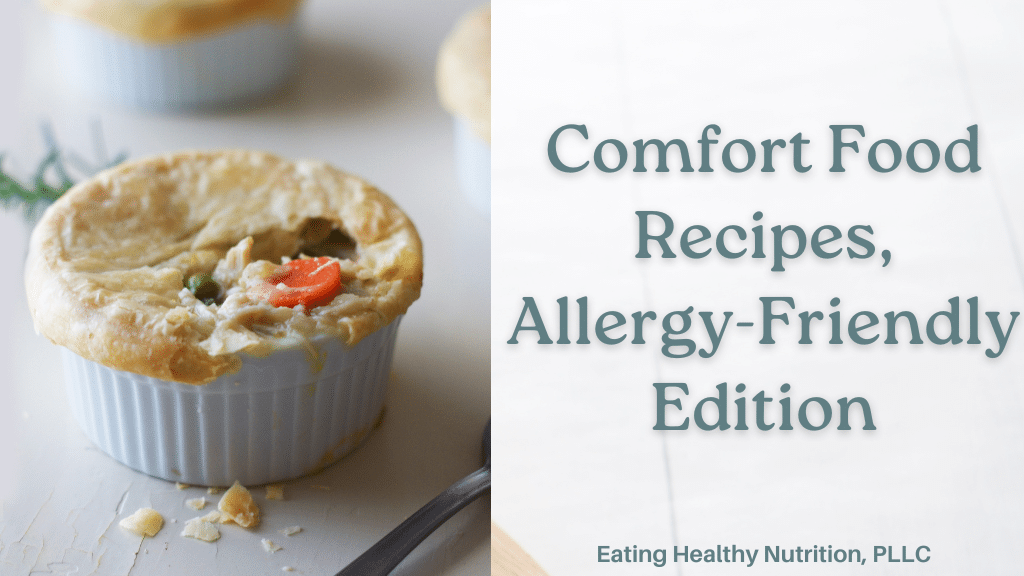
Here in the Northeast, late fall and winter tend to hit abruptly, and the cold settles in fast. This year we’re running a full ten degrees colder than usual, spending most days in the 30s. When the temperature drops like that, people instinctively want something warm, familiar, and grounding. It’s comfort food season!
Add the holiday chaos on top of it all, and the cravings intensify. People are shopping, wrapping, cooking, attending events, trying to maintain family traditions, and dealing with the emotional weight that comes with the season. When life feels full and a little overwhelming, comfort food becomes the easy landing spot.
The challenge is that so many traditional comfort dishes are built around common allergens. Dairy in creamy soups and mashed potatoes. Gluten in baked pastas, pot pies, and thickeners. Eggs baked into casseroles and desserts. Sesame tucked into certain breads or seasonings. And for families navigating multiple allergies, it can feel like the list of “off-limits” comfort foods is endless.
My work centers on making sure families with food allergies aren’t excluded from these experiences. Comfort food should feel safe, satisfying, and accessible to everyone. That’s the focus here: comfort food recipes that bring all the warmth and nostalgia without the allergens.

What Makes Comfort Food Comforting?
Comfort food means something different to everyone, but the patterns are consistent. Warmth tops the list for me. A bowl of hot tomato soup or a plate of warm pasta on a busy weekday hits differently than something cold from the fridge. Warm food signals grounding and calm, especially when the weather outside takes a toll.
Nostalgia is another piece of the puzzle. Certain flavors or dishes remind people of childhood, family gatherings, or holiday traditions. For me, that food was always mac and cheese. It was the thing I reached for when I wanted something familiar and comforting, and that connection still shapes what feels like “comfort” today.
Those personal ties influence how soothing a meal feels. Creamy textures matter to many adults and kids, but you don’t need dairy to achieve that. Smooth sauces, thick soups, and warm, oven-baked meals can all be recreated with allergy-safe ingredients that still give you that same cozy feel.
Hidden Allergens in Popular Comfort Foods
Comfort foods often hide allergens in places people don’t expect. Dairy is the most common culprit. It shows up in mac and cheese, mashed potatoes, creamy soups, baked ziti, casseroles, pot pies, and desserts. Gluten is in the structure of many comfort foods, including breadcrumbs, pasta, roux-thickened sauces, pie crusts, and certain soups.
Eggs appear in baked casseroles, breads, and desserts, even when they’re not obvious. Sesame can show up through buns, breads, spice blends, and some packaged broths. These ingredients are why many people with allergies opt out of comfort foods entirely.
But once you understand where allergens hide, it becomes much easier to navigate around them or rebuild the recipe safely.
How to Make Comfort Food Recipes Safe for Food Allergies
Making comfort food allergy-friendly doesn’t require reinventing the wheel. It’s about using a consistent framework: swap ingredients, simplify where you can, and build flavor deliberately.
Swapping is usually the easiest and most reliable approach. Dairy-free milks blend easily into most sauces.. Gluten-free flour blends can make a smooth, rich roux. Dairy-free butter works beautifully in mashed potatoes, crisps, and bakes. Safe breadcrumbs are available at most grocery stores. Our family enjoys Gillian’s Italian Breadcrumbs. If you’ve been cooking for allergies for a while, you probably already keep several of these alternatives in your pantry.
Simplifying helps even more. You don’t need to create five-component casseroles to feel comforted. Soups, stews, skillets, roasted meals, and slow-cooker recipes naturally lend themselves to warm, hearty flavors. They’re also easier to adapt to multiple allergies at once.
Building flavor intentionally is the final step. Spices and herbs carry a lot of weight. Cinnamon, nutmeg, ginger, and cloves warm up desserts instantly. Garlic, onion, thyme, rosemary, smoked paprika, and broth build savory depth without relying on allergens. When you’re not using dairy or gluten for richness, seasoning becomes the backbone of the dish.
Smart Ingredient Swaps for Allergy-Friendly Comfort Food Recipes
Creaminess
Unsweetened dairy-free milks make excellent bases for sauces and soups. Oat milk provides creaminess without sweetness. Coconut milk adds richness without overpowering the dish. Cashew-based options work well for those without an allergy.
Crispy Toppings
Many classic comfort foods rely on crunch. Gluten-free breadcrumbs, allergy-safe crackers, or a sprinkle of cooked bacon work well depending on your dietary needs.
Thickeners
Gluten-free flour blends work in almost every roux-based soup or sauce. Cornstarch and arrowroot help sauces thicken evenly without changing the flavor
Breading
Use gluten-free breadcrumbs or crushed gluten-free crackers when you need a coating for chicken or a topping for casseroles.
Flavor Enhancers
Spices, broths, nutritional yeast, tomato paste, caramelized onions, roasted garlic, and fresh herbs create warm, layered flavor without needing dairy or gluten for richness.
Comfort Foods That Are Easy to Make Allergy-Friendly
Simple Ways to Adapt Comfort Food Recipes
Many comfort food staples work surprisingly well with simple allergy modifications. Macaroni and cheese can be made dairy-free without losing creaminess. Chicken and rice dishes, creamy-style soups, shepherd’s pie, and potato-based dishes are all highly adaptable.
Desserts don’t have to be complicated. Apple crisp, rice pudding, and chocolate cake can all be made in allergy-friendly ways and still feel indulgent. And some desserts, like baked fruit with warm spices, are naturally allergy-friendly from the start. With the right swaps, you can recreate the comforting textures and flavors people crave.
Building an Allergy-Friendly Pantry for Comfort Cooking
When people want comfort food, they usually want it fast. Having the right ingredients in your pantry makes all the difference, especially when you’re cooking around allergies. These are the staples I recommend keeping on hand so you can pull together warm, satisfying meals.
Base Ingredients
Gluten-free pasta
White or brown rice
Safe broths (vegetable, chicken, or beef)
Canned tomatoes (crushed or diced)
Gluten-free flour blends
Dairy-free milk (oat or coconut work especially well for comfort recipes)
Proteins
Ground turkey or beef
Chicken thighs or breasts
Canned beans or lentils
Quinoa
Flavor Builders
Tomato paste
Nutritional yeast (for dairy-free depth)
Onions and garlic
Lemon juice or apple cider vinegar for brightness
Spices and Seasonings
Cinnamon
Nutmeg
Ginger
Cloves
Paprika
Smoked paprika
Thyme
Rosemary
Garlic powder (my favorite)
Onion powder (my second favorite for savory dishes)
Toppers and Textures
Gluten-free breadcrumbs
Allergy-safe crackers
Dairy-free butter
With these staples in your kitchen, most comfort food recipes become easy to adapt. You don’t need specialty ingredients or complicated substitutions. You just need the right basics so you can swap safely and still get all the warmth and familiarity you’re craving.
Comfort food shouldn’t be something people with allergies have to avoid. With simple swaps, thoughtful ingredients, and a little practice, you can recreate the warm, nostalgic dishes people crave throughout the colder months and the holiday season. Whether you’re managing one allergy or juggling multiple restrictions, comfort food can still be safe, familiar, and cozy.