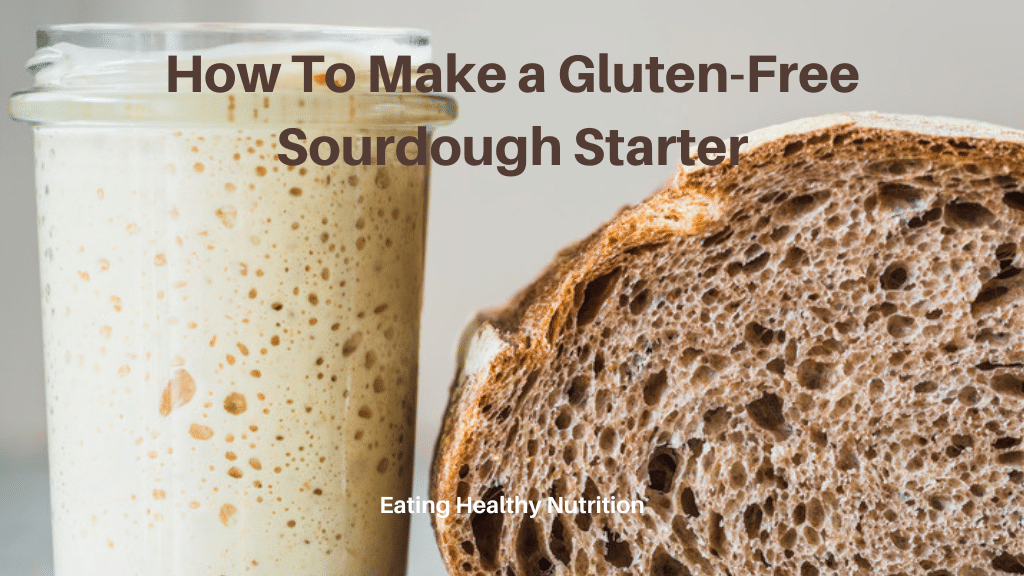
If you’ve searched for a gluten-free sourdough starter and landed here, you’re likely in one of two places.
You want to make gluten-free sourdough bread, but every starter tutorial feels overly technical or written for traditional wheat baking.
Or you tried once, saw nothing happen for a few days, and assumed you failed.
Gluten-free sourdough behaves differently. Fermentation, texture, and rise do not mirror traditional wheat baking, and hydration plays a much larger role than most tutorials explain.
The good news is this: a gluten-free sourdough starter is not complicated. It just requires clarity.
This guide walks you through activating a gluten-free starter step by step, including exact feeding ratios, what to expect day by day, how to tell when it’s ready to bake, how to store and revive it, and how to build one from scratch if you prefer not to use a dehydrated culture.
If you want a starter that reliably doubles and performs consistently in baking, this will give you a clear framework to follow.
Quick Overview
- Flour used: King Arthur Gluten-Free Bread Flour
- Feeding ratio: 1:1:1 by weight (50g starter, 50g flour, 50g water)
- Room temperature: 69–72°F
- Fully active by: Day 6–7
- Ready to bake when: Doubles in 6–8 hours
What You Need to Make a Gluten-Free Sourdough Starter
- King Arthur Gluten-Free Bread Flour
- Warm water
- Digital kitchen scale
- Glass jar
- Spoon
This guide uses King Arthur Gluten-Free Bread Flour, which contains starches and binders that influence hydration and fermentation. Results may vary slightly with other gluten-free blends.
Feeding Ratio Explained (With Exact Measurements)
Use a 1:1:1 ratio by weight:
- 50 grams starter
- 50 grams gluten-free flour
- 50 grams warm water
After discarding, keep about 50 grams of starter in the jar. You can use the extra starter in gluten-free sourdough discard recipes such as crackers, cinnamon rolls, or cookies.
Consistency matters. A thinner, pancake-batter texture performed better than a thick, dough-like consistency. When the starter was kept looser, activity increased.
If measured by cups, approximately ½ cup flour and ½ cup warm water was used. However, weight measurements are more accurate and produce more predictable results.
Day-by-Day Timeline (Days 1–7)
This timeline reflects activation using a dehydrated gluten-free starter at normal home temperatures.
Room temperature averaged 69–72°F. On colder days, storing the jar in the oven with the light on helped maintain warmth.
Day 1–2: No Activity
No bubbles. No visible change. This is normal.
Day 3: Small Bubbles Appear
A small amount of bubbling begins.
Day 4: Increased Bubbling
More consistent bubbling throughout.

Day 5: Clearly Active
The starter begins rising more noticeably.
Day 6: Significant Rise
Strong rise. In some cases, it may push against the top of the jar.

Day 7: Fully Active
Predictable rising pattern. Reliable fermentation.
By Day 5–6, doubling began occurring consistently. Once active, the starter typically doubled in size within 6–8 hours.
A healthy starter had a slightly sour, flour-forward smell.
Signs Your Gluten-Free Starter Is Ready to Bake
Your starter is ready when:
- It doubles in size within 6–8 hours after feeding
- Bubbles are visible throughout
- The top looks slightly domed
- It smells mildly sour
Gluten-free starters may not behave exactly like wheat starters. Focus on doubling time and consistent bubbling rather than appearance alone.
At this point, you can move directly into your gluten-free sourdough bread recipe.
How to Store Your Starter
If baking regularly, feed every 12 hours and discard as you go.
If baking less often, store the starter in the refrigerator.
This starter was successfully refrigerated for up to 3 weeks. To revive:
- Remove from fridge
- Feed 1–2 times per day
- Wait until it consistently doubles again
Typically, after a day or two of “waking up,” it returned to full activity.
Troubleshooting Common Problems
Why Is My Gluten-Free Starter Not Bubbling?
Possible causes:
- Room temperature is too cold
- Starter is too thick
- Needs more frequent feeding
Try using warm water, storing in a slightly warmer location, or loosening the consistency.
Can I Skip a Feeding?
Yes. If a feeding goes beyond 24 hours, the starter usually recovers with the next feeding. Gluten-free starters are more flexible than many people expect.
What If I Leave It in the Fridge Too Long?
Even after up to 3 weeks in the refrigerator, this starter revived with 1–2 days of consistent feedings.
What About Mold?
This starter did not develop mold. To prevent issues:
- Use a clean jar
- Clean the rim after feedings
- Refrigerate when not in use
Can You Make a Gluten-Free Sourdough Starter From Scratch?
Yes. You can build a gluten-free sourdough starter using only gluten-free flour and water.
You do not need a dehydrated starter to begin, but building from scratch may take 7–14 days to reach consistent doubling because the fermentation process needs time to fully develop.
To start from scratch:
Day 1
- Mix 50g gluten-free flour with 50g warm water.
- Stir well and cover loosely.
- Leave at room temperature.
Days 2–3
- Discard half.
- Feed with 50g flour and 50g warm water.
- Stir and return to room temperature.
You may see little to no activity the first few days. That is normal.
Days 4–7
- Continue feeding every 12–24 hours.
- Look for small bubbles forming.
- The mixture should gradually develop a mildly sour smell.
Once the starter begins doubling in size within 6–8 hours after feeding, it is ready to use for baking.
Important Notes When Starting From Scratch
- Temperature matters. Starters develop best around 68–72°F.
- Gluten-free flours behave differently than wheat flour. Some blends ferment faster than others.
- Texture should resemble thin pancake batter rather than thick dough.
Starting from scratch requires patience, but the process is flexible. Even if progress feels slow in the beginning, consistent feeding and stable temperature typically lead to success within 7–14 days.
Frequently Asked Questions
How long does it take for a gluten-free sourdough starter to become active?
In this case, full activity developed by Day 6–7 at room temperature.
How long does it take to double once active?
About 6–8 hours at 69–72°F.
Does gluten-free starter look different from traditional sourdough?
Yes. It may be thinner and less structured. Doubling time and consistent bubbling are better indicators than appearance alone.
Is gluten-free sourdough difficult?
It sounds more intimidating than it is. Once the feeding rhythm is established, it becomes predictable and manageable.
Final Thoughts
Gluten-free sourdough sounds intimidating at first, but in practice it is flexible and forgiving.
If you miss a feeding, it can recover. If it slows down in the fridge, it can wake back up. If it takes a few extra days to become active, that is still normal.
What matters most is consistency, temperature, and paying attention to texture. Once your starter begins doubling predictably, the process becomes straightforward. With consistent feeding and temperature control, results become stable and reliable.
From there, you can move confidently into baking gluten-free sourdough bread, experimenting with discard recipes, and adjusting hydration based on what you observe.