Valentine’s Day in elementary school looks sweet and simple from the outside. Kids decorate Valentine mailboxes, wear red, pink, or white, and exchange treats with classmates. Some classrooms host parties. Others send home bags stuffed with candy and cards.
For food allergy families, Valentine’s Day is never just about picking something cute. It’s another holiday that requires planning, checking, re-checking, and holding your breath when food is involved, especially candy.
Candy is one of the hardest food categories for allergies. Ingredients change, labels are inconsistent, and manufacturing practices are rarely clear. And while other parents are grabbing something festive on their way out of Target, allergy parents are standing in the candy aisle checking every label.
This isn’t about fear. It’s about fatigue.
The Assorted Chocolate Box Moment That Stuck With Me

This year, I decided to buy my kids Valentine chocolate boxes, and the decision surprised even me.
It started at Christmas. My husband gave me a classic assorted chocolate box, the kind with different fillings inside. My kids were hovering nearby while I opened it, watching closely as I picked each piece. Even though the flavor guide was printed on the bottom, there was still that moment of surprise. Which one would it be? Caramel? Cream? Something crunchy?
They were so into it. And suddenly, it hit me.
They’ve never had that experience.
For allergy kids, food is never a surprise. They can’t walk into a restaurant and order whatever sounds good. They can’t grab something off a dessert table without asking questions. They need to know every ingredient, every time, just to stay safe.
That sense of ease, of discovery, of not having to think, it’s something they miss out on more often than people realize.
I loved getting assorted chocolate boxes from my parents when I was a kid. It felt special. And in that moment, watching my kids watch me, I felt a wave of sadness that they couldn’t share in that simple joy.
So I searched for a safe option and found it through Vermont Nut Free Chocolates.
The box itself is safe. That part is known. That’s the difference for allergy kids, knowing the container is safe even when the contents are a surprise. You don’t know exactly which chocolate you’ll get next, and for allergy kids, that kind of surprise is a big deal. It’s a rare moment where food feels fun instead of calculated.
What “Safe” Valentine’s Candy Really Means in Real Life
When people talk about “safe” candy, they usually mean well. But safety, for food allergy families, goes far beyond what’s printed on the front of a package.
Ingredient (Contains) Statements
A contains statement tells you which major allergens are intentionally in the food. This is always the first thing I check.
But it’s not the whole story.
“May Contain” and Shared Facility Warnings
These statements are optional. Completely optional.
I didn’t always know that. I learned it through an online food allergy group when my daughter was first diagnosed. Also, I used to call manufacturers, thinking a phone call would give me the most accurate answer. Now I email instead. That way, I have a written response, a date, and something I can reference again, because manufacturing practices change.
If a product doesn’t say “may contain,” it does not mean cross-contact didn’t happen. It just means the company didn’t disclose it.
That realization made me more informed, but also more frustrated. We are not asking manufacturers to change their ingredients. We are asking for clear labeling so families can make informed decisions.
Why Valentine’s Day Takes So Much Mental Energy
My kids are older now. My daughter is in high school and no longer exchanges Valentines. My son attends an elementary school that is nut-free and allergy-aware, which helps more than I can explain.
But I remember the early years vividly.
When my daughter was little, she didn’t attend a nut-free school. Valentine’s Day planning started weeks in advance. You didn’t want to be the difficult parent asking others to change what they sent in. But you also wanted your child to be safe.
So we let the school do what they were going to do. When she came home, we went through everything together. She never ate food at school. Not because she was excluded intentionally, but because safety came first.
And then I would make a huge Valentine basket at home. Candy she could eat. Toys. Little surprises. It honestly felt like a mini Christmas.
Looking back, I think I was trying to make up for the lack of inclusivity. I wanted her to feel special. I might have handled things differently now. I probably would have emailed teachers more directly, even though they already knew her allergies, just to keep communication open.
Over time, things shifted. Around second grade, I noticed schools sending out more allergy-aware emails. We switched schools, and they were more proactive. And culturally, awareness grew.
Most parents are picking something cute. Allergy parents are picking something safe.
Why We Chose Non-Food Valentines This Year
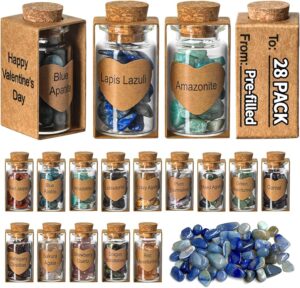

This year, we went with non-food Valentines for my son’s class.
His school is nut-free, but we don’t know every allergy in his classroom. So instead of risking someone feeling left out, we chose to skip food altogether.
I bought four different Valentine options on Amazon. He looked at all of them and immediately chose two: small bottles filled with colorful gems and little fidgets with phrases kids love right now like drip, skibidi, ate, and sigma.
He thought they were cool. He couldn’t wait to give them to his friends. He didn’t once question not giving candy.
That mattered to me more than anything.
Finding Your Rhythm With Food Allergies
Valentine’s Day still takes planning in our house. It probably always will. But it doesn’t carry the same weight it once did. Finding allergy-friendly and nut-free Valentine’s candy for school used to feel overwhelming, but it’s gotten easier with awareness and better options. Over time, we’ve found our rhythm. My kids know what questions to ask. I know when to step in and when to step back. And the goal has shifted from making everything perfect to making sure they feel included, confident, and safe.
Food allergies don’t disappear, but the way you live with them changes. You build systems. You find workarounds. You create moments, like a surprise chocolate box or a non-food Valentine your child is excited to give. And slowly, the holidays start to feel lighter again.
If you need a simple checklist of what works for classroom celebrations, you can find my full nut-free Valentine’s classroom guide here.
I’m working on a starter kit for food allergy families who are just beginning this journey. I’ll share more as it comes together. If you’d like to stay in the loop and receive practical food-allergy resources, classroom tips, and real-life guidance, you’re welcome to join my newsletter here.