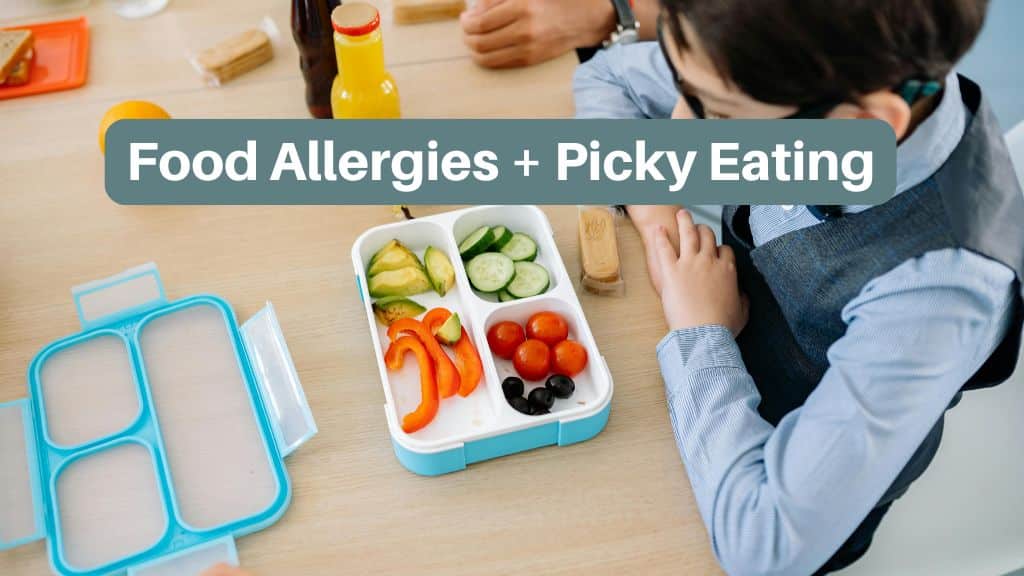
You finally figure out how to keep your child safe with food allergies, and then suddenly they stop eating the foods you worked so hard to find.
They come home from school starving. You open the lunchbox, and the main meal is still sitting there untouched.
Maybe the only thing they ate was the chips, fruit snacks, or crackers.
As a dietitian and food allergy mom, I know how emotionally exhausting this can feel. You are trying to manage food safety, nutrition, school lunches, growth, and normal childhood eating habits all at the same time.
And picky eating can make all of it feel ten times harder.

Sometimes it starts when they are toddlers and suddenly refuse foods they used to eat. Other times it happens later, when kids become more socially aware and start comparing their lunches to everyone else’s at school.
I have experienced both.
When my son was younger, we struggled more with fruits and vegetables. As my children got older, my daughter became more selective in different ways, especially around protein foods and school lunches.
When kids already have multiple foods removed from their diet because of allergies, picky eating can make parents feel even more anxious about whether their child is getting enough nutrients.
I hear this concern from parents constantly:
“What if they are not getting enough protein?”
“What if they are not getting enough calcium or iron?”
“What if all they want is pasta every day?”
The good news is that picky eating and food allergies can improve over time, especially when we stop trying to fix everything at once.
Why Picky Eating Happens in Kids With Food Allergies
Picky eating in children with food allergies is incredibly common, and there are usually multiple factors involved.
For many families, picky eating is not simply about being “difficult” with food. It often develops slowly over time as children try to navigate safety, comfort, routine, social situations, and fear around eating.
Fear of New Foods After Food Allergies
Some children become nervous about trying new foods after experiencing allergic reactions or hearing repeated conversations about foods being dangerous.
Even when these conversations are necessary for safety, they can sometimes create anxiety around unfamiliar foods.
For some children, this fear expands beyond their actual allergens. For example, a child allergic to sesame may suddenly become fearful of all seeds, even if they are safe. A child with a peanut allergy may become nervous around foods they cannot easily identify or foods that look different from what they normally eat.
After a while, sticking to familiar foods simply feels safer.
Safe Foods Become Comfort Foods

Humans are creatures of habit, especially when it comes to food.
As a dietitian, I have this conversation with adults all the time, even adults without food allergies. Most people naturally gravitate toward foods they know, foods they trust, and foods that feel predictable.
Now layer food allergies on top of that.
Children with food allergies spend a large part of their life learning which foods are safe and which foods could make them sick. Over time, many children become extremely attached to their “safe foods” because those foods feel familiar, comfortable, and low stress.
Sometimes picky eating develops simply because children do not want to risk stepping outside of what already feels safe and successful.
This is especially common after reactions, during school years, or during periods of increased anxiety.
Limited Food Choices Can Increase Picky Eating
Food allergies naturally reduce food choices.
Over time, many children end up rotating the same meals and snacks repeatedly because parents know they are safe, easy, and accepted.
Eventually, two things can happen:
- children become bored with their safe foods
- children become resistant to trying anything outside their normal routine
This creates a frustrating cycle where parents feel pressure to increase variety, but children feel more comfortable narrowing foods down even further.
How Pressure Around Eating Can Make Picky Eating Worse
Children are incredibly sensitive to stress around food.
When parents become anxious about nutrition, protein intake, school lunches, or growth, children often sense that pressure immediately.
Unfortunately, pressure around eating usually backfires.
The more children feel pushed to eat certain foods, the more resistance many children develop around meals.
This becomes even more emotional in food allergy families because parents are not only worried about nutrition. They are also carrying the responsibility of keeping their child safe every single day.
That is a heavy mental load.
School Lunch Stress and Food Allergies
School lunches can become emotionally complicated for children with food allergies.
Some children feel frustrated bringing different foods than their peers. Others feel embarrassed explaining their allergies or answering questions about why their lunch looks different.
As kids get older, fitting in socially often becomes more important than eating lunch.
I have seen children:
- skip lunch entirely
- avoid eating in front of friends
- refuse to bring certain foods to school
- ask for the same lunch every day because it feels socially “safe”
This is one reason lunchbox struggles often increase during the tween and teen years.
Texture and Sensory Preferences
Not every picky eating behavior is directly related to allergies.
Some children also have strong texture, smell, or sensory preferences around food.
This can become more noticeable in children with food allergies because their available food choices are already more limited.
For example, a child may technically have safe protein options available, but if they dislike the texture of beans, eggs, meat, or dairy alternatives, parents can quickly feel like they are running out of options.
This is where flexibility and patience become extremely important.
Food Allergies, Picky Eating, and Letting Go of Perfect Meals
One of the biggest things I tell parents is this:
You do not need to create the perfect lunchbox every single day.
A lunch your child actually eats is more nourishing than a perfectly balanced lunch that comes home untouched.
As a dietitian, this was something I had to learn myself.
I wanted perfectly balanced lunches with protein, vegetables, healthy fats, and variety every day. But real life does not always work that way, especially with food allergies and picky eating layered together.
Instead of trying to fix everything overnight, focus on one goal at a time.
That might mean:
- trying one new fruit
- adding a new protein food
- reducing pressure at meals
- helping your child become more involved in packing lunches
- increasing variety slowly over time
Small progress still matters.
Picky Eating Strategies for Toddlers, Kids, and Teens
Toddler and Preschool Years

When my kids were younger, snack-style lunches and mini portions worked much better than traditional meals.
Some ideas that helped:
- deconstructed meals
- snack plates
- small portions of familiar foods
- repeated exposure without pressure
- letting them choose a new produce item at the grocery store
One thing that helped my son was making grocery shopping feel like a fun challenge instead of pressure. We would pick one new fruit or vegetable to try together.
Over time, his variety slowly expanded.
Tweens and Teens

As kids get older, independence becomes more important.
One of the biggest shifts for us was involving my daughter more in packing her own lunches. If teens help choose and prepare their food, they are often much more likely to eat it.
Some lunchbox ideas with food allergies that worked better for us included:
- thermos meals
- leftovers from dinner
- protein pasta dishes
- allergy-friendly muffins
- pasta salads
- build-your-own lunch boxes
- snack-style lunches
My daughter has never liked sandwiches, even after finding safe bread options. Once I stopped trying to force sandwiches and focused on foods she actually enjoyed, lunches became much less stressful.
Lunchbox Ideas for Picky Eaters With Food Allergies
Not every child wants a traditional sandwich lunch, and honestly, that is more common than many parents realize.
For years, I kept trying to make sandwiches work because that felt like the “normal” lunch option. But once I accepted that my daughter simply did not enjoy sandwiches, lunches became much less stressful.
Sometimes thinking outside the lunchbox helps children feel more comfortable eating at school.
A few realistic school lunch ideas for food allergies include:
- pasta with protein pasta or legume-based pasta
- safe chicken nuggets in a thermos
- sunflower seed butter with crackers instead of sandwiches
- allergy-friendly muffins
- leftovers packed hot
- snack-style lunches with several safe foods
- dairy-free yogurt alternatives
- fruit paired with a safe protein source
- homemade pasta salad
- deconstructed taco bowls or rice bowls
The goal is not perfection.
The goal is helping your child feel safe, nourished, and comfortable eating at school.
You also do not need to reinvent lunch every single day.
Many children feel more comfortable rotating familiar meals, especially during stressful school periods. Instead of trying to create endless variety overnight, focus on finding a handful of balanced lunches your child consistently enjoys and slowly build from there.
Common Nutrient Concerns for Kids With Food Allergies
When children have multiple food allergies and picky eating, parents often worry about nutrients like:
- protein
- calcium
- iron
- healthy fats
These concerns are understandable, especially when common allergy foods like dairy, eggs, peanuts, and tree nuts are removed.
The good news is that there are still many ways to support nutrition, even if progress feels slow.
For example:
- protein can come from beans, lentils, seed butters, protein pasta, meat, or poultry
- calcium can come from fortified dairy-free milks, beans, and leafy greens
- iron can come from meats, beans, lentils, and fortified cereals
- healthy fats can come from avocado, olive oil, seeds, or fatty fish, if tolerated
I also have a full list of allergy-friendly protein ideas here.
What Helped Reduce Our Food Allergy Mealtime Stress

Honestly, the biggest thing that helped our family was shifting our mindset.
Instead of focusing on everything my children were not eating, I started focusing more on what was going well and what small step we could work on next.
One new protein food.
One new vegetable.
One lunch idea they might actually eat.
Feeding kids with food allergies can already feel overwhelming. When picky eating gets added into the mix, it can feel emotionally exhausting.
But you are not failing because your child’s lunchbox comes home half full sometimes.
Progress with food allergies and picky eating is usually built slowly, over time, through patience, flexibility, and reducing pressure around food.
If you are navigating food allergies, picky eating, and the everyday stress of feeding kids safely, you are not alone.
Join my newsletter for practical allergy-friendly meal ideas, lunchbox strategies, and realistic nutrition support for busy families.