
Summer camp is something many children look forward to all year long. It gives kids the chance to spend more time outdoors, make friends, build independence, and stay active during the summer months, especially when parents are still working.
But when food allergies enter the picture, camp planning suddenly becomes much more complicated.
At school, there is often more structure in place. Your child may already have a 504 plan, familiar teachers, established routines, and classmates who understand their allergies. Summer camp is usually very different. Meals and snacks may feel less structured, food sharing can happen more casually, and many camps rely heavily on teenage counselors who may not fully understand the seriousness of food allergies.
For many parents, especially the first time sending a child to camp, this can create a tremendous amount of stress and mental overload. Sleepaway camp can add another level entirely because now you are handing over responsibility for multiple days or weeks at a time.
One of the hardest parts as a parent is learning how to balance safety with independence. That balance looks very different depending on your child’s age, personality, maturity level, and allergy history. A five year old attending camp for the first time will need a very different level of support compared to a teenager who has spent years learning how to advocate for themselves.
As both a dietitian and a food allergy mom, one of my personal goals was always to raise children who were aware and informed about their food allergies, but not consumed by fear. Awareness matters. Communication matters. Safety matters. But I also wanted my children to feel confident participating in activities, asking questions, and making decisions without carrying constant anxiety around food.
Research has shown that many children with food allergies begin developing anxiety around age seven. While both of my children became more thoughtful about their allergies as they got older, we worked hard to avoid creating an environment of constant fear. Now at 11 and 14 years old, I see them approaching situations with awareness and confidence rather than panic. They gather information, ask questions, practice reading ingredient labels carefully, assess whether something feels safe, and make decisions accordingly.
The good news is that children with food allergies absolutely can have safe, positive, and memorable camp experiences. The key is having the right systems, conversations, and expectations in place before camp even begins.
How to Choose a Camp for a Child With Food Allergies

Choosing a camp for a child with food allergies may require a little more research than simply signing up for the local town camp.
You are not just choosing activities. You are choosing who is responsible for your child’s safety throughout the day.
One of the first things I personally looked at was the overall structure of the camp and who would be supervising my children. Are counselors adults or mostly teenagers? Is there a nurse on site? How experienced is the staff with food allergies?
For our family, we chose camps with more adult supervision. Yes, they were sometimes more expensive, but it gave us additional peace of mind. My daughter attended specialty art camps that she loved, while my son preferred more outdoor survival-style camps. We personally chose not to send them to a large town camp environment where most supervision came from teenagers.
That does not mean teenage counselors cannot do a good job. Many are wonderful. But unless someone has personal experience with food allergies or proper training, they often do not fully understand how quickly situations can escalate or how careful children with food allergies need to be around shared food.
It is also important to match the camp environment to the complexity of your child’s allergies. Every child and every family will have a different comfort level.
For example, my son has allergies to cashew, pistachio, and sesame. While I would still strongly prefer a nut-free environment, I would personally feel more comfortable sending him to a traditional sleepaway camp after having detailed conversations with staff and understanding their safety procedures.
My daughter’s situation is very different because she has multiple food allergies including peanuts, tree nuts, sesame, soy, egg, flaxseed, chia seed, and mustard seed. For her, I would be much more likely to look for a camp that is specifically allergy-aware, nut-free, or even Top 9 allergen-free.
The more complex the allergies, the more important it becomes that the camp truly understands food allergy management and cross contact prevention.
Questions to Ask Before Camp Starts
Before camp begins, schedule a conversation with staff. Do not rely solely on intake forms.
Some important questions to ask include:
- Who is directly supervising my child throughout the day?
- Is there a nurse or medical professional on site?
- Who administers epinephrine during an emergency?
- Are counselors trained to recognize allergic reactions?
- How are food allergies communicated to staff?
- Can my child bring meals and allergy-friendly snacks from home?
- Is food sharing allowed among campers?
- Where are epinephrine auto-injectors stored?
- Does the camp allow self-carry for older children?
- How are field trips handled?
- Who carries epinephrine off-site?
- Are meals cafeteria-style or family-style?
- Is there a dedicated allergy-friendly meal option?
- How is cross contact prevented in the kitchen?
- Are snacks allowed in bunks or cabins?
- Will my child have access to a phone or smartwatch if needed?
Some of these questions would only be asked to sleepaway camps as compared to day camp, such as information regarding bunks or cabins.
Food Allergy Safety at Day Camp vs Sleepaway Camp
There is a major difference between day camp and sleepaway camp when food allergies are involved, and every family’s comfort level will look a little different.
With day camp, many families choose to send meals and snacks from home. This often gives parents more control and can significantly reduce anxiety, especially for children with multiple food allergies or a history of severe reactions.
However, not every family wants to send food from home all summer long, especially if camp meals are included in the cost of the program. Many parents want their child to feel included in the full camp experience, including eating meals and snacks alongside friends. That is completely understandable.
This is where having detailed conversations with camp staff becomes extremely important.
Before camp starts, ask:
- What foods are served?
- Are allergy-friendly meals available?
- How is cross contact handled?
- Are there dedicated preparation areas?
- Can ingredients and labels be reviewed ahead of time?
- Is the kitchen willing to work with your child’s specific allergies?
- Are substitutions available?
- Is food served cafeteria-style, buffet-style, or individually packaged?
Some camps are very accommodating and truly understand food allergies. Others may not have the staffing, training, or kitchen setup to safely manage complex allergies. If the camp cannot clearly explain how they would keep your child safe, it may not be the right fit for your family.
On the other hand, some day camps require all children to bring their own lunches and snacks. In that situation, families may feel much more comfortable because food is already individualized and controlled from home.
Sleepaway camp becomes more complicated because children are eating multiple meals away from home every single day, often in large dining hall settings with less direct parental oversight.
This is why many families specifically seek out:
- allergy-aware camps,
- nut-free camps,
- or even Top 9 allergen-free camps.
Some sleepaway camps also have dietitians on staff, which can be incredibly helpful for families managing multiple food allergies.
When evaluating a sleepaway camp, ask questions about:
- dining halls,
- food preparation,
- bunk snacks,
- campfire activities,
- s’mores nights,
- off-campus trips,
- and cabin food policies.
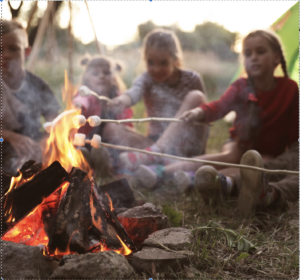
For younger children especially, it is also important to ask where they will sit during meals and snacks. Some families may prefer a nut-free or allergy-aware table, while others may want their child integrated with friends while still maintaining safe spacing and supervision.
There is no one right answer. Every child, allergy profile, and family comfort level is different.
The goal is not just safety. It is helping your child safely participate, feel included, and gradually build confidence navigating food allergy situations outside the home.
Teaching Your Child to Self-Advocate at Camp

One of the most important skills children with food allergies can develop is self-advocacy.
Children need to learn how to:
- ask questions,
- speak up,
- tell adults when something feels wrong,
- avoid unknown foods,
- and communicate clearly about their allergies.
For younger children, ingredient labels should always be checked by a trusted adult. Many labels contain complicated ingredient names that young children simply cannot evaluate safely on their own.
As children get older, camp can actually become an opportunity to build independence and confidence in real-world situations.
Teenagers especially should begin learning how to navigate:
- shared food situations,
- dining halls,
- campfires,
- group snacks,
- and social pressure around food.
This gradual exposure is important because eventually they will need these same skills in college, work environments, travel situations, and everyday life.
The goal is not fear. The goal is preparation and confidence.
How to Store Epinephrine Safely During Summer Camp
Summer heat creates another challenge for families managing food allergies.
Epinephrine should not be exposed to extreme temperatures for long periods of time. This can become difficult at camps where children spend the entire day outdoors.
For my son’s outdoor camp, we used a temperature-regulating storage case, Frio, because the campers were outside all day long, sometimes in temperatures reaching 90 to 95 degrees.
It is also important to:
- check expiration dates before camp starts,
- make sure multiple staff members know where epinephrine is stored,
- confirm whether your child will self-carry,
- and ensure epinephrine is easily accessible during all activities and field trips.
Camp Meal and Snack Planning Tips for Food Allergy Families
Many families feel more comfortable sending meals and snacks from home, especially at day camp.
This is completely reasonable and often reduces stress for both parents and children. Meal planning with food allergies often becomes even more important during busy summer schedules.
When packing meals and snacks for camp, think about:
- safe protein options,
- hydration,
- shelf stability,
- heat safety,
- and social inclusion.
Children do not want to feel isolated at camp. Sending allergy-friendly alternatives that still allow them to participate in snack time, campfires, and celebrations can make a huge emotional difference.
For highly sensitive children, I also recommend sending:
- their own sunscreen,
- bug spray,
- wipes,
- backup snacks,
- and extra safe treats.
Allergy-Friendly Summer Camps to Explore
There are many camps today that are becoming increasingly aware of food allergies and willing to work closely with families.
Some camps are:
- nut-free,
- allergy-aware,
- Top 9 allergen-free,
- or have dedicated allergy protocols and dietitians on staff.
A few examples families may want to explore include:
Overnight Camps
Specialty Allergy-Aware Camp
Outdoor Adventure Camps
- Camp Kon-O-Kwee Spencer
- Camp Manitou (All Boys Camp)
Every family’s comfort level is different, and the best fit depends on your child’s allergies, maturity, personality, and medical needs. The most important step is having open conversations with camp staff well before the first day of camp.
Final Thoughts on Summer Camps and Food Allergies

The goal is not to eliminate every possible risk or create constant fear around food allergies.
The goal is to build a thoughtful plan that allows your child to safely participate, build independence, and enjoy the experiences that make childhood memorable.
With preparation, communication, and the right support systems in place, children with food allergies absolutely can have incredible camp experiences.
If you are looking for more real-life food allergy tips, allergy-friendly meal ideas, and safe snack inspiration, you can subscribe to my newsletter below.