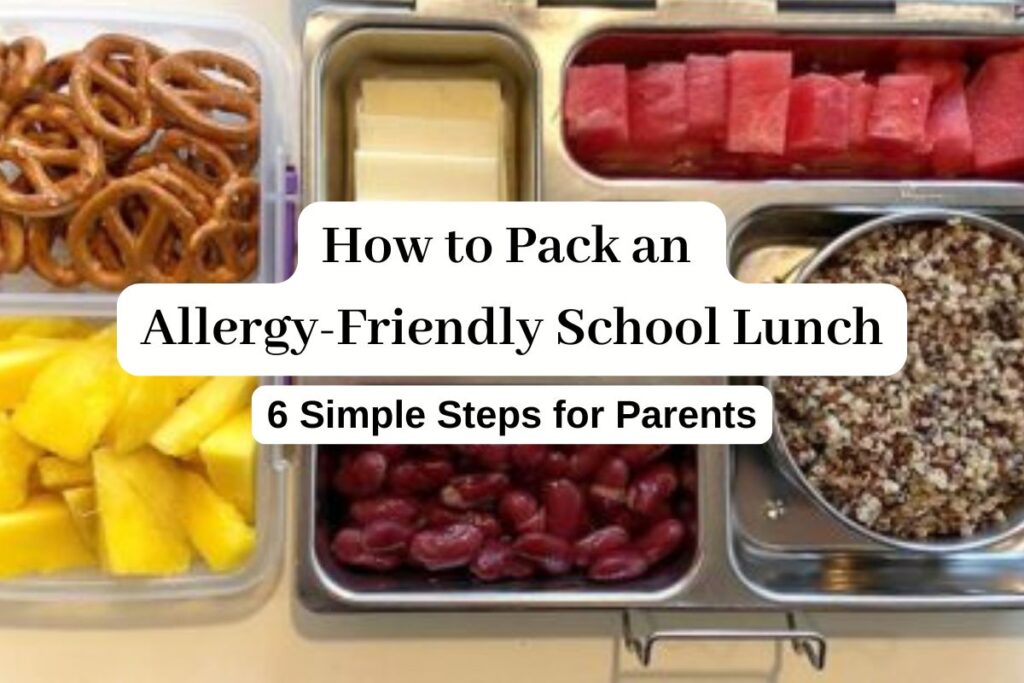
Packing school lunches can feel overwhelming when your child has food allergies. Between reading labels, finding safe foods, and making sure your child enjoys what you pack, lunch preparation can quickly become stressful.
As both a registered dietitian and a food allergy mom, I know how challenging it can be to pack safe, balanced lunches day after day. The good news is that a little planning can make the process much easier.
Here are six simple steps that can help you pack allergy-friendly school lunches with less stress and more confidence.
Looking for more ideas? Download my free guide with 100+ allergy-friendly snack ideas for school, sports, camp, and busy afternoons.
Step 1: Focus on What Your Child Can Have, Not What They Can’t
When your child has food allergies, it can be easy to focus on all the foods they need to avoid. Instead, try shifting your attention to the many foods they can safely enjoy. This mindset can make lunch packing feel less overwhelming and help your child develop a more positive relationship with food.
Involve your child in the planning process whenever possible. Ask them what they would like to see in their lunchbox and encourage them to help brainstorm ideas. Children are often more likely to eat lunches they helped plan.
Focusing on safe foods helps build confidence over time. As your child becomes familiar with trusted foods and brands, they learn that school lunches can be both safe and enjoyable.
Step 2: Research Allergy-Friendly Foods and Brands
Finding safe foods is often one of the most time-consuming parts of managing food allergies, especially in the beginning. It can take time to identify products that fit your child’s allergies, taste preferences, and nutritional needs.
As you discover foods that work well for your family, keep a list of your favorite products and brands. Having a collection of go-to items can make grocery shopping, meal planning, and lunch packing much easier.
Whenever possible, include simple foods such as fruits, vegetables, beans, and plain proteins. These foods can provide important nutrients while naturally avoiding many common allergens.
Although it may take some trial and error at first, building a list of safe foods and trusted products will save time and reduce stress throughout the school year.
Step 3: Plan Your Lunch-Packing Time
One of the biggest mistakes parents make is trying to pack lunches in the morning. Mornings are already busy with breakfast, getting dressed, brushing teeth, packing backpacks, and getting everyone out the door on time.
Instead, choose a dedicated lunch-packing time the day before. For our family, that usually happens around 4:00 p.m. after school. The kids are doing homework, relaxing, or getting ready for activities, and I can focus on preparing lunches without feeling rushed.
You don’t have to pack every component at once. Some parents like to prep fruits and vegetables on the weekend, while others prepare proteins or leftovers after dinner. Find a system that works for your family and stick with it.
Having a routine takes away the daily decision-making and makes lunch packing feel much less stressful. A few minutes of planning the day before can make your entire morning run more smoothly.
Step 4: Build Lunches Using a Simple Formula
A simple formula can take the guesswork out of packing school lunches and help ensure your child gets a healthy school lunch that is balanced.
Try including:
Protein + Fruit and/or Vegetable + Whole Grain
Examples include:
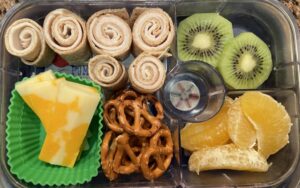
Mini turkey tortilla roll-ups + gluten-free pretzels + dairy-free cheese + kiwi + clementine slices
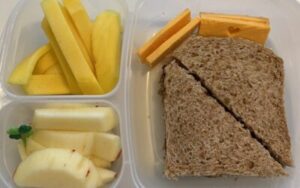
Sunflower butter sandwich on whole grain or gluten-free bread + cheese squares + mango + apple slices
Using the same formula each day makes planning easier while still allowing plenty of variety.
Step 5: Make It Fun
Yes, I said fun!
Children with food allergies can sometimes feel different from their peers, especially when they see classmates eating foods they cannot have. Adding a little creativity to their lunchbox can make lunchtime feel more special.
If your children are younger, consider using colorful silicone cups, sandwich cutters, fruit cutters, or fun food picks. These small touches can make familiar foods look exciting and encourage children to try new foods as well.
The best part is that creating a fun lunch doesn’t have to take much extra time. Most of these additions take only a few minutes, but can make a big difference in how your child feels when they open their lunchbox.
Over the years, I’ve found that these small touches often become the things my children remember most. A sandwich cut into a fun shape, a colorful container, or a special note can help make lunchtime feel a little more exciting and a little more normal when managing food allergies.
Step 6: Don’t Reinvent the Wheel
Keep a running list of successful lunches on your phone or in a notes app. When you find combinations your child enjoys, save them.
Many parents feel pressure to come up with a completely different lunch every day, but that simply isn’t necessary. Most children are happy rotating through a handful of favorite meals and snacks.
Repeating lunches saves time, reduces decision fatigue, and helps ensure your child is eating foods they enjoy and feel comfortable eating.
Remember, the goal is not variety for the sake of variety. The goal is a safe, balanced lunch your child will actually eat.
Allergy-Friendly Lunchbox Food Ideas
Need some inspiration? One of the easiest ways to build a balanced lunch is to include a protein, a fruit and/or vegetable, a whole grain, and a fun food. Mix and match from the lists below to create lunches your child will actually look forward to eating.
Whole Grain Options
- Whole grain bread
- Tortillas
- Pita bread
- Crackers
- Brown rice
- Pasta
- Pancakes
- Waffles
- Bagels
- English muffins
- Homemade pizza
- Gluten-free alternatives, if needed
Protein Options
- Turkey or chicken slices
- Leftover grilled chicken
- Meatballs
- Sunflower seed butter
- Pumpkin seed butter
- Beans
- Lentils
- Hummus
- Cheese (if tolerated)
- String cheese (if tolerated)
- Yogurt (if tolerated)
- Cottage cheese (if tolerated)
- Hard-boiled eggs (if tolerated)
- Tuna (if tolerated)
- Salmon (if tolerated)
- Leftover dinner proteins
Looking for more protein ideas? Check out my complete guide to allergy-friendly protein options.
Fruit Options
- Apples
- Pears
- Grapes
- Strawberries
- Blueberries
- Raspberries
- Oranges
- Clementines
- Watermelon
- Applesauce
- Fruit cups packed in own juice
- Dried fruit
- Fruit pouches
Vegetable Options
- Carrot sticks
- Cucumber slices
- Bell peppers
- Cherry tomatoes
- Celery sticks
- Snap peas
- Broccoli florets
- Cauliflower florets
- Roasted vegetables
- Side salad
Tip: Pair vegetables with a favorite dip such as sesame-free hummus, ranch dressing, guacamole, or another allergy-friendly spread, such as nut-free pesto.
Fun Food Options
- Pretzels
- Popcorn
- Baked chips
- Allergy-friendly granola bars
- Homemade muffins
- Fruit leather
- Allergy-friendly cookies
- Granola bar
- Trail mix made with safe ingredients
Want to Make Lunch Packing Even Easier?
Pack Leftovers
One of my favorite lunch-packing shortcuts is using leftovers from dinner.
Many dinners already include a protein, starch, and vegetable, which means most of the work is already done. Simply pack a portion into a lunch container or thermos and add a piece of fruit or a simple snack on the side.
This strategy can be especially helpful on busy evenings when you have after-school activities, sports practices, or late work meetings. It saves time, reduces food waste, and gives your child a lunch that is already known to be safe.
Turkey Meatloaf Lunch
Leftovers are one of the easiest ways to pack a balanced lunch with minimal prep.
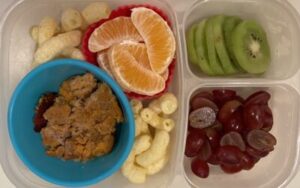
Turkey meatloaf leftovers + kiwi + grapes + clementine + puffed doodle
Chicken Noodle Soup Lunch
Thermos lunches can be a great option during colder months and work well with leftovers.
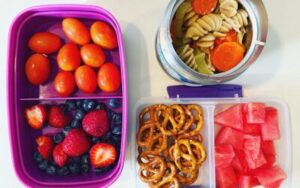
Chicken noodle soup + pretzels + watermelon + grape tomatoes + berries
What Should I Pack School Lunches In?
There are countless lunchbox options available today, but bento-style containers continue to be one of the easiest ways to keep foods organized and separated.
Below are the lunchboxes our family has used for years and can stand by. They all have different price points, but they all get the job done well.
The best lunchbox is the one that fits your child’s appetite, keeps foods fresh, and makes packing easier for you.
Still Need More Inspiration?
Pinterest can be a great place to find allergy-friendly school lunch ideas, but try not to compare yourself to the picture-perfect lunches you see online.
Remember, your goal is not to create a social media-worthy lunchbox every day. Your goal is to provide a safe, nutritious lunch that your child enjoys eating.
If your child is nourished, included, and able to safely participate in the school day, you are doing an amazing job.
Frequently Asked Questions
How do I safely pack a lunch for a child with multiple food allergies?
Start by focusing on the foods your child can have rather than the foods they need to avoid. Create a master list of safe proteins, fruits, vegetables, grains, dairy products (if tolerated), and snacks that you can reference when planning lunches.
When packing lunch, aim to include a protein, a whole grain or healthy starch, and a fruit and/or vegetable. Healthy fats and dairy foods can also be included when appropriate. You do not need every food group in every lunch, but variety over time helps support good nutrition.
Most importantly, keep a list of lunches your child enjoys. Rotating favorite meals can make lunch packing easier while helping your child feel confident and comfortable with their safe foods.
What can I pack in a nut-free school lunch?
Many schools require nut-free lunches, but there are still plenty of options. Sunflower seed butter sandwiches, turkey roll-ups, yogurt, cheese, hummus, fruits, vegetables, crackers, and leftovers can all make great nut-free lunch choices.
How do I pack protein in an allergy-friendly lunch?
Protein options depend on your child’s allergies but may include poultry, beans, seed butters, dairy products, eggs, hummus, lentils, fish, or leftovers from dinner. For more ideas check out my post all about allergy-friendly protein options.
Can I pack leftovers in a school lunch?
Absolutely. Leftovers are one of the easiest ways to pack a balanced lunch. Use a thermos to keep foods warm and add fruit or vegetables on the side.
What are some allergy-friendly snacks for school?
Fresh fruit, vegetables with dip, popcorn, pretzels, seed-based snacks, allergy-friendly granola bars, yogurt, and homemade muffins can all work well depending on your child’s allergies. For a full list of allergy-friendly snacks, check out my FREE guide!
How can I make lunch packing easier?
Create a master list of safe foods, keep trusted brands on hand, pack lunches the night before, and rotate favorite meals rather than trying to create something new every day.
About Elizabeth Pecoraro, RDN
Elizabeth Pecoraro, MS, RDN, CDN is a registered dietitian nutritionist, cookbook author, and food allergy mom. She specializes in helping families navigate pediatric food allergies while ensuring children receive the nutrition they need to grow and thrive.
Through individualized nutrition counseling, meal planning, and practical food allergy education, Elizabeth helps parents build confidence around feeding children with food allergies. She is the author of The Allergy-Friendly Cookbook and works with families virtually throughout multiple states.
For personalized support, meal planning, or food allergy nutrition counseling, visit the Services page to learn more.